
Our very own John Consterdine was recently featured in the Irish Independent, see the full article below:
God created the world in a week, and rested on Sunday. But did you know why he needed that rest, or what he got up to the night before?
Manchester, that’s what.
“And on the sixth day, God created MANchester” reads a T-shirt in Afflecks, a labyrinthine little indie mall in the Northern Quarter. The slogan was created in the acid house era of the 1980s by Leo Stanley, a fiftysomething vendor at RKID tells me: “There are people my age who come in and say, ‘I remember the first time I bought it.’”
I had two main images of Manchester coming into the city. One was red; the other blue. Toss a bucket hatful of rain on top of that, and definitely maybe a couple of Gallagher brothers glaring through the grey. But now I have another: a sixth-day spirit.
“Did you know that Manchester invented the weekend?” says John Consterdine of Manchester Taxi Tours.
In the industrial 1840s, he explains, William Marsden and Robert Lowes campaigned for a half-day on Saturdays. When football clubs were formed, free Saturday afternoons is when games and shows were staged. I guess even God’s plan needed tweaks.
Consterdine drives a spotless black cab, and can theme tours around topics like history, music and football (or if you can’t decide, ‘Rock and Goal’). It’s an electric vehicle, which makes it a quieter ride and easy to hear him… even in swathes of Manchester rain.
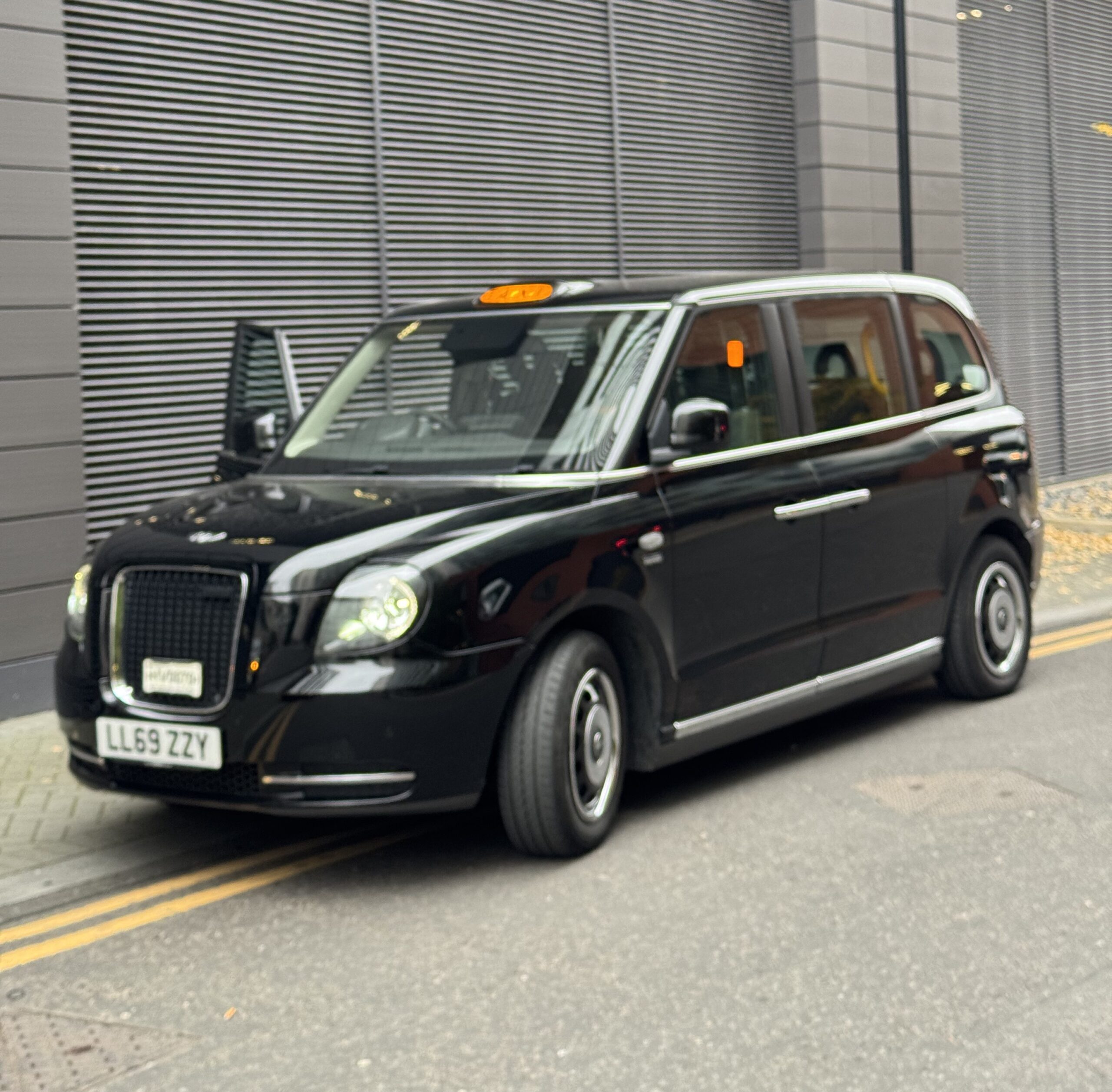
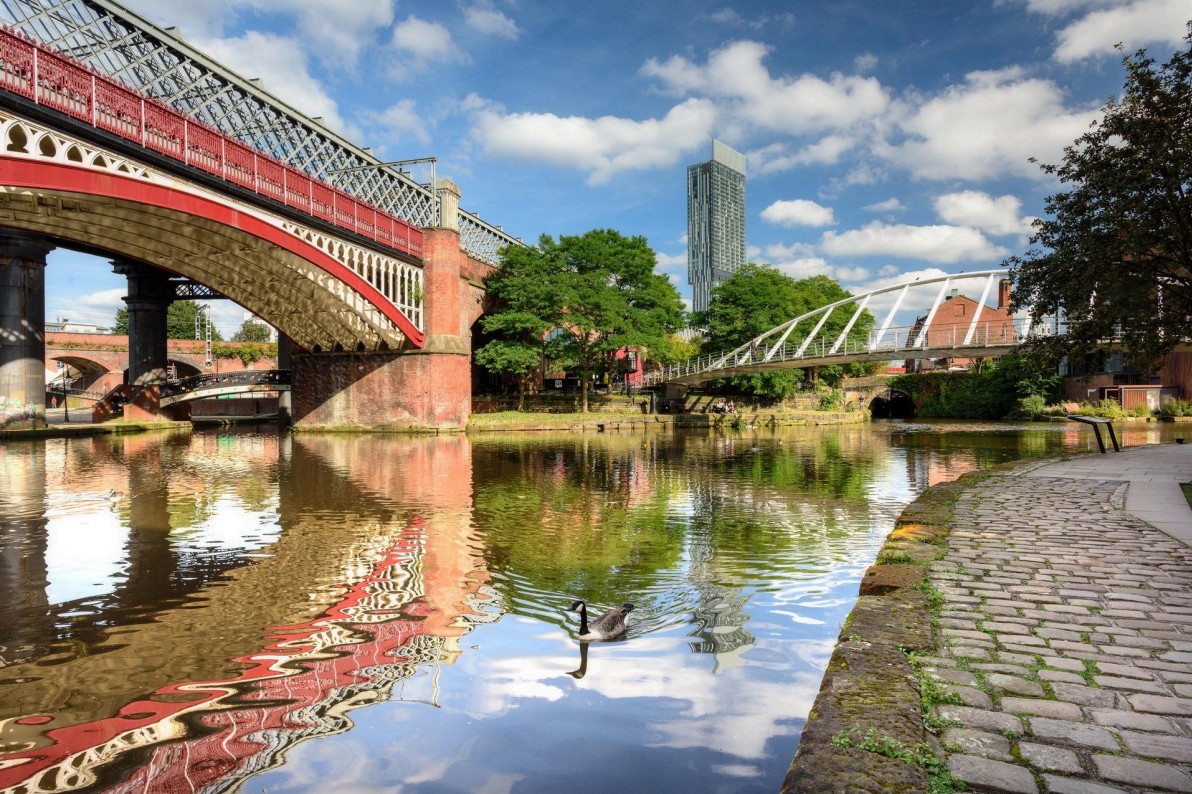
“As my gran used to say, we’re not made of sugar,” he says, taking us past iconic industrial bridges and canals, to the famous football stadia, the original Coronation Street location and the site of the former Hacienda night club – a druggy hub in the Mad-chester days, but since replaced by apartments.
There’s plenty of chat about Manchester’s music scenes, from Northern Soul to acid house and the classic indie era stretching from Joy Division to The Stone Roses, Happy Mondays, Chemical Brothers, Elbow (and, erm, Take That). We even make a stop at the Salford Lads’ Club, where The Smiths shot an iconic album photograph.
Good tour guides share their own stories too, and I learn that John used to box in the Salford club, and he points out his son’s apartment in a rebooted warehouse brick building as we go by.
As for the local football rivalry, he says visitors are far more interested in who locals support than there’s one thing Manchester United and City fans do agree on. “Both would rather the other won the league than Liverpool.”
It’s a brilliant unboxing of the city. He paints a picture of a former industrial hub, whose symbol today is the bee (“hard-working and generous”). You’ll spot it on everything from city buses to souvenir chocolates.
Similar to parts of Pittsburgh or Glasgow, the transformation of iconic buildings and brick warehouses gives it a real sense of dynamism. Our hotel, the Kimpton Clocktower, is set in an old insurance building with Victorian tiles and soaring ceilings, for example. Like New York’s High Line, Manchester’s 330m Castlefield Viaduct is now a “sky garden”.
I get the feeling of a city on the move. Chanel has held its Métiers d’Art show here, Salford’s waterside Media City is home to the BBC, and Sportcity the largest collection of sporting venues in Europe. Robert De Niro was in town the same week to promote Manchester Nobu – a 76-storey building, including a Nobu outlet, to open in 2030. And if that doesn’t tire you out, the name of Gary Neville’s investment company will: Relentless.
Neville, famous as one of Manchester United’s ‘Class of ’92’, is today an uber-driven businessman and media star, and we’re met by hostesses in red dresses at one of his newest projects, St Michael’s.
But every big city has its bling, and it’s an exception on our flying visit. “Manchester is the new London,” says a diner at the next table, sharing our disappointment but keen to talk up the city.
There, an exquisite procession of textures, tastes and temperatures ended with a disarming scoop from a big bowl of ‘Barney’s tiramisu’. Chef Tom Barnes created the recipe for his dad, we learn, when due to a neurological condition, he could only eat soft foods. It’s a super counterpoint to the precision preceding it.
Barnes leans over the open kitchen counter to give a take on Manchester – a city that feels international, but is home to just over 550,000 souls.
“There’s a nice vibe, everyone helps each other,” he muses. “You can walk everywhere in 20 minutes.”
At Maray, we eat delicious Middle Eastern plates, including a ‘disco cauliflower’. Scranchester has a new tour of Chinatown starting next month, and Higher Ground balances a steely open kitchen with warm service, low intervention wines and dishes largely drawn from local farms and its own market garden in Cheshire.
Next door, sister property Bar Shrimp serves a mean martini, has a tasty sound system, and co-owner Richard Cossins takes the time to hand-write some tips for the Northern Quarter and Ancoats neighbourhoods.
“We’ve still got soul, not like a lot of bigger cities,” he says.
The city still has grit and grim, too. Similar to Dublin, there are visible homeless and social issues, and a few kerfuffles as we mosey through the Northern Quarter the next day.
Here, Afflecks feels like a portal back to the 1990s, full of tees, vinyl, badges and collectibles. Outside, busy bars and restaurants are interspersed with warm, analogue shops. It’s a weathered, browsable counterpoint to the gloss of skyscrapers that seem to sprout like mushrooms in Manchester.
Did you know there are 100,000 students between Manchester and Salford? “Every September, we get a fresh wave of 20,000 or 30,000 students,” Consterdine says. “It kind of refreshes everything.”
The sixth-day spirit sizzles in smaller corners, too. Buskers don’t need licences. Pedestrians treat traffic lights as advice, rather than rules. Certain bars and clubs open far later than London. In the circular Central Library, there are eye-catching small exhibitions on punk and HIV activism.
Museums and galleries are mostly free. Displays include shackles and a whip – a stark reminder that the industrial city grew rich on cotton from slave plantations in the Americas. Elsewhere, collections are being reimagined with themes like migration, work and connection.
“We do things differently, here,” as the character of Factory Records founder Tony Wilson says in 24 Hour Party People.
I leave Manchester on a Saturday, ironically. But I’m already talking with friends about a return for its best invention: a weekend.
Copyright Manchester Taxi Tours. All rights reserved
